The modern workplace has undergone a significant transformation in recent years. As organizations adopt flexible work models, prioritize employee well-being, and optimize available space, the traditional open-plan office is being re-evaluated. While open layouts encourage collaboration, they often fall short in providing privacy, noise control, and functional zoning. This is where intelligent space planning solutions come into play, reshaping offices into productive and adaptable environments.
The Evolution of Office Spaces
Earlier office designs focused heavily on enclosed cabins and rigid layouts. Over time, businesses shifted toward open offices to promote transparency and teamwork. However, studies and workplace feedback have highlighted challenges such as distractions, lack of focus, and reduced confidentiality. Modern offices now aim for a balanced approach—combining openness with defined spaces that support diverse work styles.
Thoughtful interior planning allows organizations to create environments that foster collaboration without sacrificing concentration. This balance is achieved through modular and flexible design elements that can evolve with changing business needs.
Understanding Office Partitioning Systems
Office Partitioning Systems are architectural and interior solutions designed to divide large office spaces into functional zones without permanent construction. Unlike traditional walls, these systems offer flexibility, aesthetic appeal, and efficient space utilization. They can be customized to suit different departments, workflows, and organizational cultures.
These systems are not merely physical dividers; they play a strategic role in shaping how employees interact, focus, and move within the workspace. By defining boundaries while maintaining visual continuity, they contribute to a structured yet open office environment.
Types of Office Partitioning Solutions
Modern offices have access to a wide range of partitioning options, each serving distinct purposes:
Glass Partitions
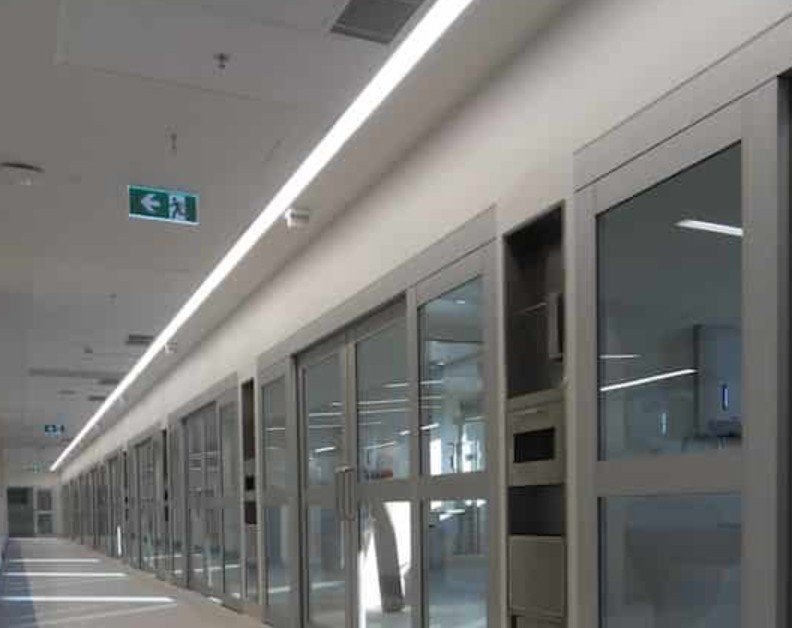
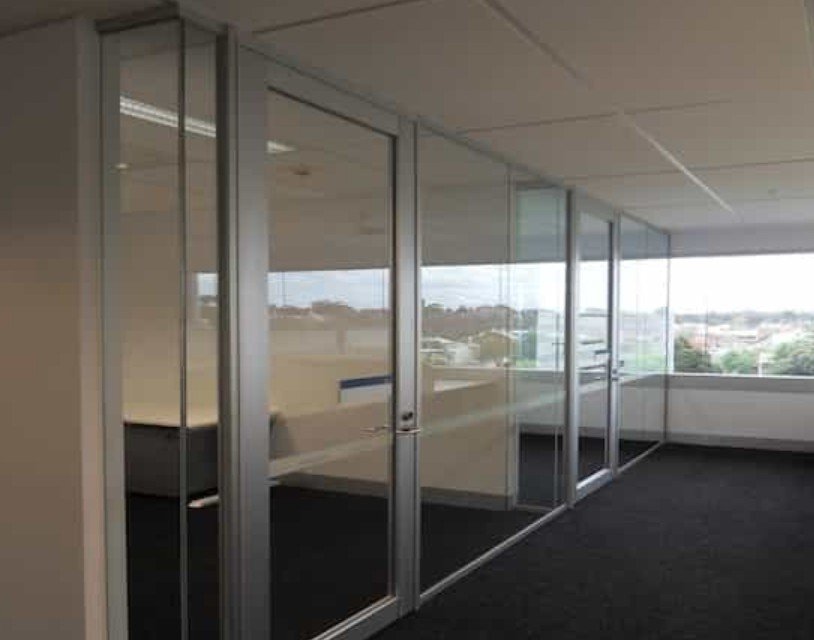
Glass partitions are widely used in contemporary offices due to their ability to allow natural light while maintaining separation. They create a sense of openness, reduce the feeling of confinement, and support transparency across teams.
Modular and Demountable Partitions
These systems are designed for flexibility. They can be easily assembled, relocated, or reconfigured as organizational needs change, making them ideal for growing businesses.
Acoustic Partitions
Noise control is a critical factor in productivity. Acoustic partitions are engineered to minimize sound transmission, making them suitable for meeting rooms, focus zones, and confidential discussions.
Wooden and Composite Partitions
For offices seeking a warmer or more traditional aesthetic, wooden or composite partitions provide visual appeal along with functional separation.
Each option can be tailored to align with branding, space constraints, and operational requirements.
Benefits for Smart & Modern Offices
Integrating Office Partitioning Systems into workplace design offers several practical advantages:
- Improved Space Utilization: Large floor areas can be efficiently divided without permanent alterations.
- Enhanced Productivity: Employees benefit from reduced distractions and clearly defined work zones.
- Flexibility and Scalability: Offices can adapt quickly to organizational restructuring or expansion.
- Better Aesthetics: Modern partitions complement contemporary interior designs, contributing to a professional environment.
- Cost Efficiency: Compared to traditional construction, partitioning solutions often require less time and investment.
These benefits make partitioning systems a strategic choice rather than a purely aesthetic one.
Role in Hybrid and Activity-Based Work Models
With the rise of hybrid work and activity-based working, offices now serve multiple purposes—collaboration, focused work, meetings, and social interaction. A single static layout is no longer sufficient. Flexible zoning allows spaces to be repurposed throughout the day.
Partitioning solutions support this shift by enabling offices to create quiet zones, collaborative areas, and private meeting rooms within the same floor plan. This adaptability ensures that the workplace remains relevant even as work patterns continue to evolve.
Sustainability and Compliance Considerations
Modern office design also places emphasis on sustainability and compliance with building standards. Many partitioning materials are recyclable and designed for long-term use, reducing waste associated with frequent renovations. Additionally, well-designed partitions can improve energy efficiency by optimizing lighting and air circulation.
From a compliance perspective, partitioning systems can help organizations meet safety, accessibility, and acoustic standards without extensive structural changes.
Choosing the Right Approach
Selecting the appropriate partitioning solution requires careful assessment of organizational needs, employee workflows, and available space. Factors such as privacy requirements, future scalability, acoustic performance, and visual branding should be evaluated holistically. A well-planned layout ensures that partitions enhance, rather than restrict, movement and communication within the office.
Conclusion
Smart and modern offices are defined by their ability to adapt, support productivity, and provide a balanced work environment. Thoughtfully implemented Office Partitioning Systems play a crucial role in achieving these goals by combining flexibility, functionality, and design. As workplaces continue to evolve, such systems offer a practical solution for organizations seeking to create efficient, employee-centric spaces without compromising on aesthetics or long-term adaptability.